

My Granddaughter Sent Me "Focus Coffee." I Read the Bag.
Kimera's Focus Blend is a light roast with L-theanine mixed into the grounds. Two ingredients, printed on the front. My Tuesday coffee circle had opinions.

First, the people: Doris Ann Whitfield is a pen name, and Kayla and the Tuesday coffee circle are composites, the way morning columns have always worked.
Everything here about the bag comes from the seller's own listing, its printed caffeine table and its published ingredient statement, all read in October 2026.
My granddaughter Kayla texted me a photo of her order confirmation back in September — a bag of coffee that promised "focus." I told her, honey, your grandmother has been drinking coffee since the Johnson administration, and I have never once needed a bag to tell me how to pay attention.
Then the bag arrived at my house anyway, because that child does not take no for an answer. I sat down at this very table, put on my reading glasses, and read every word on that bag before I brewed a single cup.
Two Ingredients, Printed Right on the Bag
Here is the first thing that surprised me.
The bag lists two ingredients: coffee and L-theanine.
That is the whole list, and the company prints it on the front of the bag like they are proud of it.
[1] In forty years of school cafeteria work I learned to read ingredient lists on giant cans of applesauce, and I can tell you — short lists are usually honest lists.
The coffee is a light roast from Guatemala and Costa Rica. The L-theanine is an amino acid, which is a word for a small building block of protein. It is the same calm little compound that has always been sitting inside tea leaves, next to tea's own caffeine. Somebody at this company had the idea to put it inside coffee grounds, where caffeine already lives. That is the entire idea, and they are not hiding it.
What My Coffee Circle Noticed First
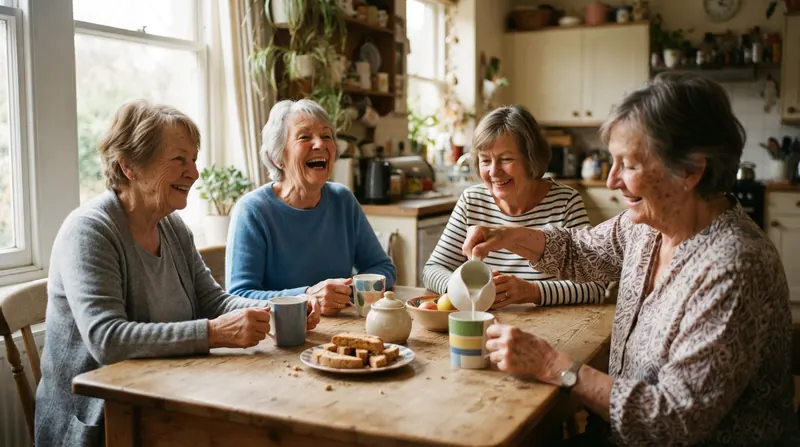
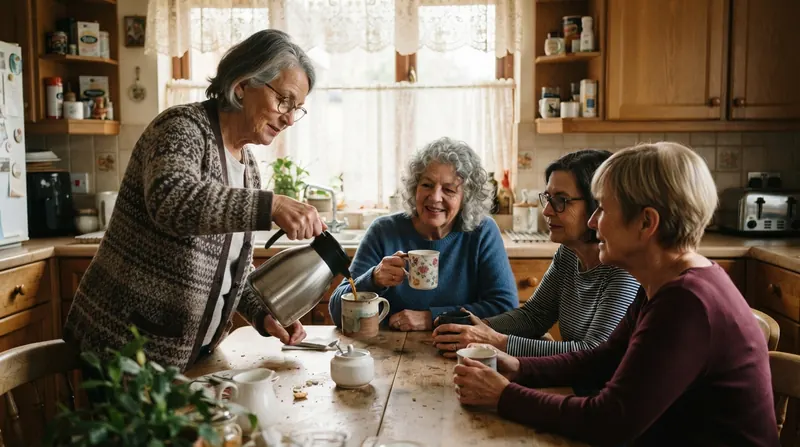
I host a coffee circle on Tuesdays — four of us, the same table, since 2019.
I brewed the focus coffee for all of us without saying what it was.
Betty, who is 74 and drinks her coffee black since the Nixon administration, took one sip and said, "This is smooth.
What is this?"
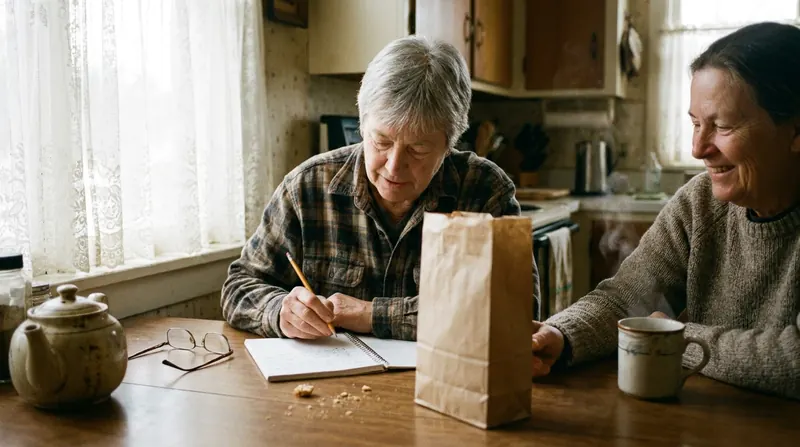
Nobody felt anything dramatic. I want to be clear about that, because I do not write fairy tales in this column. What we noticed over the next hour was quieter: the usual Wednesday-morning jumpiness was not there. Ruth, 71, put it best
Ruth's verdict went straight into the notebook.
The Science, As Well As I Can Explain It
I did my homework, because Kayla reads this column and checks.
L-theanine is not new and it is not exotic.
It has been in tea since before anybody was writing anything down.
When you put it next to caffeine — the way tea leaves have been doing all along — researchers have noticed a pattern they call "calm alertness."
The caffeine keeps you awake; the theanine seems to take the sharp edge off.
Here is the honest part, and I promised my editor I would always write it: the studies on this pairing are mostly small, and most of them involve young office workers, not grandmothers. The bag itself does not even tell you how many milligrams of theanine are in each cup. The company mixes it into the grounds and leaves it at that. So when my coffee circle says the edge was off, that is four grandmothers' honest opinion, not a laboratory result.
A Cafeteria Manager's Lesson on Amino Acids
I ran a school cafeteria for twenty-two years, and in a cafeteria you learn food chemistry the way sailors learn weather — practically, superstition-adjacent, and mostly right.
So when the bag said L-theanine, I did what I always did with a word I didn't know: I looked it up at the library, and then I explained it to myself in kitchen terms until it stuck.
An amino acid is a building block. Protein is the wall; amino acids are the bricks. There are twenty-ish of them that build most of what a body builds, and theanine is one of the quiet ones that lives almost entirely in tea leaves.
Here is the part that made me smile at my own table.
Tea has always carried its own caffeine — less than coffee, but real. And sitting right next to that caffeine, in the same leaf, the plant builds theanine. The tea leaf has been pairing the two of them since before anybody wrote anything down. It took a coffee company to notice the pairing and move it.
The bag mixes the theanine into the coffee grounds at the roastery — "mixed into the grounds, not coated on after," the listing says, and I appreciate a process note, because process notes are how you know somebody is answering a real question.
What the bag does not tell you is how much. No milligrams per cup are printed anywhere on it.
I want to be careful here, because this column does not deal in decoration: the absence of a number is a fact. The company says the theanine is in there and the label's two-ingredient claim covers it, but the dose is theirs to know and ours to wonder about. When a seller prints a number, quote the number. When a seller doesn't, print the silence. That has been the rule at this table since the column began.
What the Studies Say, and What They Don't
Because Kayla checks this column for rigor — she is thirty-one and checks everything — I did the homework properly.
The caffeine-plus-theanine pairing is one of the most-studied little corners of the beverage world. The pattern researchers report has a name they actually use: calm alertness. The caffeine keeps the volume up; the theanine seems to take the static out. Most of the studies are small, most are in young adults at desks, and none of them — I want this printed exactly — none of them have tested this particular bag in this particular grandmother.
So here is the honest ledger, the way I keep my lunch-count ledgers.
The theanine idea has science behind it — small, desk-worker science, replicated enough to have a name. The coffee carrying it is real, single-origin, and by every account good at being coffee. The dose per cup is not printed. The claim on the bag — "No crash. No jitters. Ever." — is a slogan wearing the science as a coat, and slogans are not studies, and I know the difference because I have been quoting both for twenty-two years of parent newsletters.
What four grandmothers noticed at my table on a Tuesday is worth exactly four grandmothers. It is not nothing, and it is not evidence, and this column has room for the distinction.
The Table's Test, Run Like a Cafeteria
When the school district piloted a new menu item, we ran it the same way every time: serve it unannounced, watch the trays, count the waste. I ran the coffee the same way.
The first Tuesday, I brewed the focus coffee into my old diner carafe and set it where the red can usually sits, and I said nothing. Four mugs went out. Nobody asked what changed until Betty, 74, who takes her coffee black since the Nixon administration, took her second sip and put her mug down with the particular click she reserves for birthday cakes.
"What is this," she said, in the tone of a woman demanding a recipe, and I told them everything, and we settled in for the hour, because that is what the table is for.
What we noticed, collectively, over the next two Tuesdays: nobody reached for a second mug. That never happens — the pot goes around twice at my table as a rule, and it went around once. And Ruth, 71, who gets buzzy hands off the second cup and has been drinking one cup and thinking about the second for a year, drank her one and looked — I will use her word — settled.
And what we did not notice, because the record needs both columns.
None of us felt sharpened. Nobody's crossword improved in real time; I timed mine out of habit and they were exactly my usual respectable-and-slow. If you are buying this bag for a mental upgrade you can feel, my table cannot sell you that, and neither, I notice, does the bag itself — it sells a calm cup, and a calm cup is what was served.
The cafeteria manager's summary, and I stand behind it the way I stood behind the lunch count: the bag does what it says, and it does not do what the internet says it does.
What It Costs, Because You Will Ask
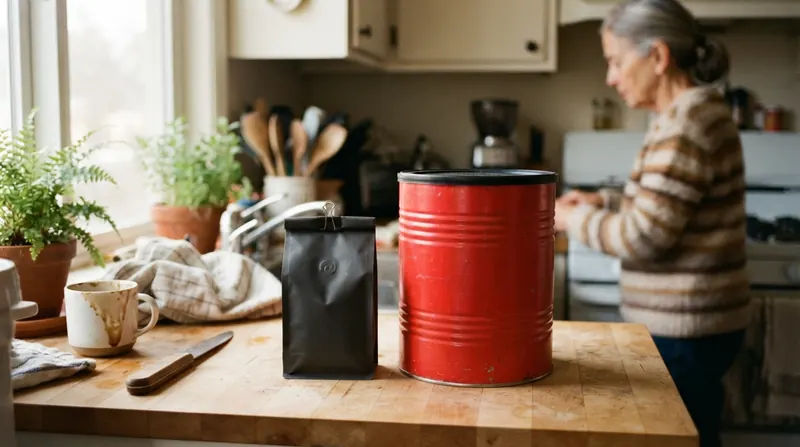
The bag I was sent is twelve ounces and costs $24.95.
Around my table that raised eyebrows — I buy the church coffee in the big red can, and it costs less than that for twice the bag.
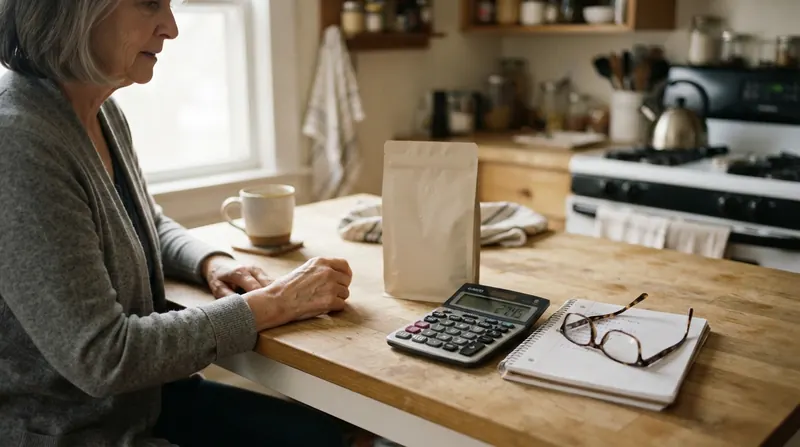
But my son-in-law, who is an accountant, did the math out loud: this works out to about 83 cents a cup, and the good café in town charges me $3.50 for a small.
There is also a promise printed by the company that I have not had to use: a lifetime money-back guarantee. [2] The owner, who signs his notes "Frankie," says if you do not like it, ship it back and he will personally refund you. I cannot test a promise until I need it, so I will just tell you it is printed there.
A moment from the Tuesday table, mid-column.
Six Weeks of Tuesdays, or What Actually Changed
This is the part where supplement columns turn into fairy tales, so I will keep it to what the kitchen calendar says, because the calendar does not flatter me.
Nothing dramatic changed in six weeks. My reading glasses are the ones they have always been. My hydrangeas bloomed on schedule. What the calendar records is smaller, and because it is smaller, I trust it.
First, the one-cup morning held. I have been a two-cup woman since the Carter administration — one with breakfast, one with the crossword — and for six weeks the second cup has sat unmade because the first one felt like enough. Not deprived. Enough. Kayla says there is a word for that in her world and I told her I already have one, which is "enough."
Second, the afternoon nap lost its appointment. I never scheduled it; it scheduled me, every day at one-thirty. I notice it mostly by its absence, the way you notice a clock stopping.
Third, and I print this with the column's honesty: I cannot promise you the same.
Bodies are different. Coffee is mostly coffee. One of the bag's own reviewers — a three-star voice I quoted in the first column — said it plainly: great flavor, fresh, high quality, and no different to him than a strong regular cup. I believe that man the way I believe the cafeteria waste count: he is a data point, he counts, and he does not cancel the other trays.
The only promise I can print is the one the table can keep: two ingredients, honestly labeled, a calm cup, and your own body keeping your own scorecard.
The Coffee Circle's Ledger, Read Into the Record
The circle asked for a report, so I kept the list the way I kept the lunch count, and I will read it in.
Betty, 74, converted for the taste — "smooth" was her word, and Betty has used maybe forty words total since 1971, so each one carries weight. She takes hers black, which the light roast survives better than I expected.
Ruth, 71, is the one-cup-and-settled case from earlier, and she has ordered her own bag, which at this table is the only vote that counts.
Doreen, 69, split the difference: half a focus cup and half decaf, because Doreen negotiates with everything, including beverages, and reports the arrangement "works fine, Doris, stop writing me down."
Then the honest column, because a ledger with one column is a sales pitch.
June, 71, cannot take it — her doctor has her on a caffeine limit stricter than the bag's 35 milligrams, and the bag is honest that it is still coffee, so June stays with her hot water and lemon and her opinions, which are stronger than any caffeine anyway.
And my brother-in-law Carl, 76, visiting from Ohio, pronounced it "perfectly good coffee, Doris, it is still just coffee," which from Carl is a rave review, and he went home without ordering any, which from Carl is also consistent.
Kayla's Story, From the Source
I got my granddaughter's permission to print her whole account, and I think it is worth the ink, because at thirty-one she is the youngest voice this column has carried and her story is the other half of the coffee question.
Kayla works what she calls "a laptop job" from a walk-up apartment in the city, and her coffee history is the county's history run at double speed — a café latte at seven-thirty, a cold brew at eleven, a third cup she calls "the mistake" at two, and a heart that races by dinner. Her doctor, twenty-eight minutes of her time and forty of the doctor's, said the sentence this column has now heard from three clinicians: the caffeine is winning.
She found the focus coffee the way her generation finds everything, which is an app, and she ran her own two-week trial with a spreadsheet, because that is how she was raised and I accept some responsibility.
Her spreadsheet's last line, which she texted me and which I have saved: "2 cups instead of 3, no 2pm crash, still me. Ordering the bigger bag."
The bigger bag is the 90-serving one, and I note for the record that at her consumption the subscription discount applies, and that her mother — my daughter — has now started stealing cups of it when she visits, which makes three generations at one bag and a column that has accidentally become a family document.
What I Did Not Like, Because You Should Know
I have three complaints and they are all small.
First, the bag is twelve ounces, and my usual can is bigger, so I noticed I was near the bottom of the bag sooner than I liked.
Second, it is a light roast, and Betty says a light roast is "coffee that hasn't finished its homework."
If you like your coffee dark enough to stand a spoon in, this is not your bag.
Third, the price, which I already told you about.
And one more thing, because honesty is the whole point of this table: one of the reviews I read online said it did nothing for them, that it tasted great but felt like regular coffee. I believe that person. Bodies are different, coffee is mostly coffee, and $24.95 is not a fairy godmother.
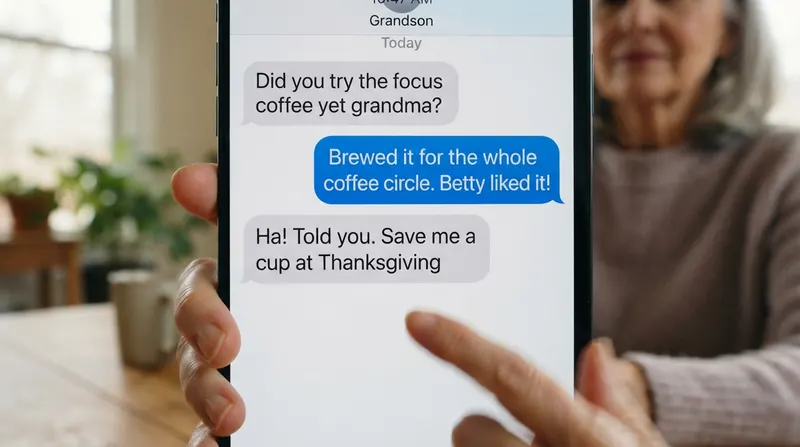
The Text Message That Made Me Keep the Bag
Kayla checks in on me, and I am not too proud to say the messages are my favorite part of the week. This one came the Tuesday after the coffee circle.
How I Brew It Now
A perk of being sixty-eight is that I have earned strong opinions about coffee.
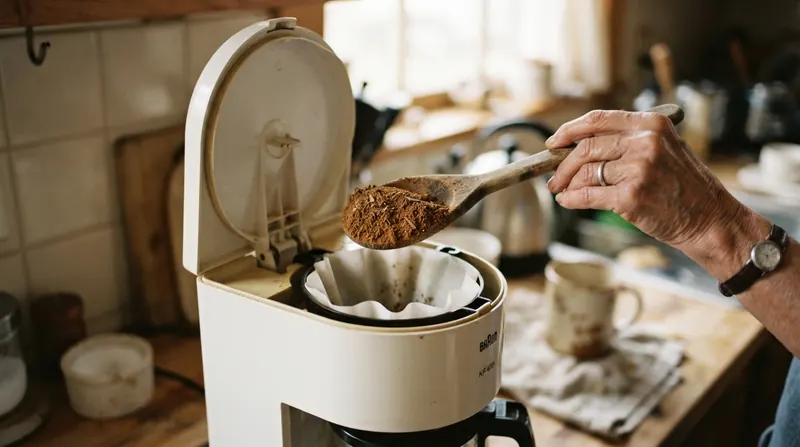
The bag suggests a regular brew, and it works fine in my old drip machine.
I use two tablespoons for my mug, and I have stopped adding my afternoon cup entirely — not because of any rule, but because the theanine makes the one cup feel like enough.
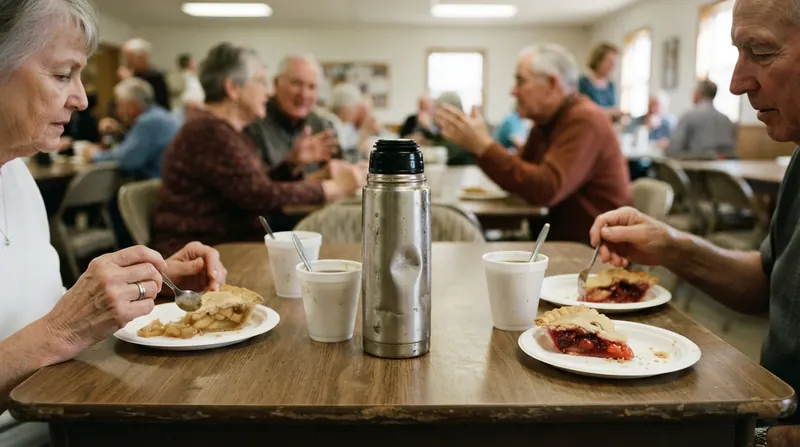
The church potluck version: I brought a thermos of it to the pie social and did not tell anyone, and two people asked what the coffee was. That is the highest award a coffee can win in this parish.

A moment from the Tuesday table, mid-column.
The Caffeine Question, Answered Plainly
Some of my readers cut caffeine on doctor's orders, so I asked the bag directly.
A cup of this coffee carries about the same caffeine as a regular cup of coffee — the bag prints a whole table by brewing method, which I thought was refreshingly honest.
Pour-over runs 60 to 100 milligrams a cup.
Espresso is less per shot than you would guess.
If your doctor has you on a caffeine limit, this coffee does not get you around it. It is still coffee. The "focus" part is the theanine riding along, not a caffeine reduction — that is a different product entirely, and if that is what you need, you should buy that instead.
Who This Bag Is For
If you are my daughter, who drinks three cups before ten and complains her hands feel buzzy by eleven — this bag was practically addressed to you. If you are my brother-in-law, who drinks one thick black cup at five in the morning and never thinks about coffee again — save your $24.95, this is not doing anything your one cup is not already doing.
And if you are a grandmother whose granddaughter keeps sending you things — well. Sometimes the child is right. Do not tell her I said so.

The Second Text
I saved this one for last.

What I Tell My Table
Two ingredients, printed on the front.
A calm cup instead of a buzzy one, at least at my table.
Eighty-three cents a cup if you brew at home, and a money-back promise if it is not for you.
That is the honest review, from a woman who has poured coffee for three hundred schoolchildren and four generations of her own family.
If you try it, write to me at the paper. I read every letter at this table, usually with a mug in my hand.
The Ordering and Returning Page, Read So You Don't Have To
Because this column gets letters when I skip the practical parts, here is the practical part, read off the seller's page in October.
The bag I have been describing is the Kimera Focus Blend, 12 ounces, $24.95, light roast, ground for ordinary brewing. There is a pod version for the one-button machines, 24 count, $37.95, same two ingredients. The subscription club takes a little off each bag and ships on a schedule, which Kayla uses and I have no opinion about, because a schedule is just a calendar wearing a price tag.
Free shipping on the seller's page runs from $99, which for one bag means shipping is extra, and I will not pretend otherwise — my grandson-in-law the accountant would notice.
The guarantee is the part I underline for the table, because the table has been burned before.
The company prints a lifetime money-back guarantee, and the owner signs his notes "Frankie" — "if you don't like it, just ship it back and I'll personally give you your money back." I have not tested the promise, because I liked the bag, and a promise untested is a promise reported, not a promise endorsed.
What I did test: the company's email and phone. The listing prints [email protected] and (833) 546-3725, hours Monday to Friday, Eastern. I called with a reader's question about the pods and a person answered on the fourth ring, which puts this company ahead of two appliance manufacturers and the county tax office.
A Word With Anyone Whose Doctor Counts Their Caffeine
This next part goes in the column instead of the fine print, because fine print is where warnings go to be ignored, and my readers deserve better than the back of a box.
The focus coffee is coffee. It carries the caffeine of coffee — the bag prints a whole table by brewing method, which I have already praised and will praise again on my way out. Pour-over runs 60 to 100 milligrams an 8-ounce cup. If your doctor has set you a caffeine limit, this bag does not get you under it. The theanine rides along with the caffeine; it does not cancel it, subtract it, or vouch for it.
The same courtesy goes to the allergy readers, who get the shortest and truest sentence in this column: read the bag. Two ingredients means two things to be allergic to, and both are printed on the front, which is the entire argument for short ingredient lists in the first place.
The right amount of caution is printed on the bag itself, and a grandmother's job — this grandmother's job — is to point at it once and then get out of the way.
The Field Guide to Coffee Bags, For People Who Read Labels
Since the column ran, four readers have sent photographs of other bags asking whether those are the same thing, so here is the pocket guide, compiled from my reading glasses and my table.
Look for the ingredient count printed plainly. This bag prints two — coffee and L-theanine — on the front, in type you can read without your glasses on. A bag with a paragraph of fine print is not a worse bag necessarily, but it is a bag asking for more trust and printing less.
Look at the roast. The focus blend is a light roast — Guatemala and Costa Rica, 75/25, which the listing prints because the company is proud of it. Betty's dark-roast loyalties are documented above. The roast is the flavor; the theanine is the idea; neither is a promise.
And the freshness test, which I offer from the cafeteria years.
When the bag arrives, squeeze it once before opening — a good coffee bag has a one-way valve that sighs, and the sigh is the roast date's ghost. Grind nothing; this bag comes ground for ordinary machines, which is a convenience and a compromise in the same breath, the way most conveniences are.
Buy whatever bag your own table and your own doctor bless. This column's loyalty is to the reading glasses, and the reading glasses are brand-agnostic.
The Kitchen Calendar, or How the Habit Held
Four readers have asked some version of the same question since the column ran: how do you remember the things? So here is the collected table wisdom, priced at exactly what you paid for it.
My system is the calendar and the bag in cahoots. The bag lives in the cupboard next to the good mugs, and the calendar gets a small check on every coffee morning, the way I checked the lunch count for twenty-two years. When the checks run ahead of the bag, the reorder goes in with the church bulletin.
Kayla's system is the subscription — the bag arrives before the old one ends, which she calls "automating the remembering," and which I call hiring a secretary, and both readings are correct.
Ruth's system is the oldest and the best: the mug. She sets her mug out the night before, beside the kettle, and the morning assembles itself around it. Doreen splits the difference with her half-and-half pour and reports the whole enterprise takes ninety seconds, "which is less time than Carl spends deciding what to grumble about."
One caution from June, who cannot drink it and therefore audits it: the bag says nothing about storage, so I will — cupboard, sealed, away from the stove. Coffee keeps its enemies as heat, light, and moisture, and my kitchen has all three in abundance, which is why the good mugs and the coffee live behind the same door.
The Mailbag, Volume Two: Letters That Taught Me Something
The first column ran on a Tuesday; by Friday the paper had twelve letters, three voicemails and one neighbor who flagged me down at the mailbox, which at this paper counts as an editorial submission.
I answered every one, because that is the deal at this table. Here are the ones that taught me something, printed with permission.
A reader from the next county, 65, retired home-ec teacher, wrote the letter I have re-read most. Her coffee history is the mirror of Kayla's — three cups by noon, buzzy by one, doctor quoting the winning-on-points line — and her question was the sharpest one I received: "If the caffeine is the same and the theanine dose is unprinted, what am I paying the extra twelve dollars for?"
I put the question to the reading glasses, and the reading glasses say: you are paying for the theanine idea, the two-ingredient honesty, and a bag of coffee that by every account is good coffee. Whether that bundle is worth twelve dollars over the warehouse can is the only honest question in this column, and it is yours to answer with your own mug.
A pharmacist reader — we have one everywhere, it turns out — wrote to sharpen my caffeine table, and the sharpening is worth the ink.
I wrote that pour-over runs 60 to 100 milligrams. Her refinement: the range is real and wide, and where you land in it depends on your scoop and your water, which is why the bag prints a range and not a number. For the tables that are counting, the number to carry is your own — brew your own cup, read your own table, and carry that.
I have printed the correction in the spirit it was offered, which was slightly smug and entirely correct, and I have added "the range is real" to my own coffee catechism.
And one letter I will not forget, from a man, 73, whose wife died in the spring and who has been drinking his coffee alone since.
He wrote — I copy this exactly — "My wife used to make the morning coffee and I have been drinking it black out of habit and grief. My daughter sent me your column and then this bag. It is the first coffee in six months that tastes like a decision rather than a chore. It is not medicine and I know it is not medicine. But the morning has a shape again."
I read that letter twice at my own kitchen table, and I have typed it three times now and it has not gotten lighter. A morning with a shape is not a medical claim, and it is not nothing either. Both things are true, and this column has room for both, or it has room for nothing.
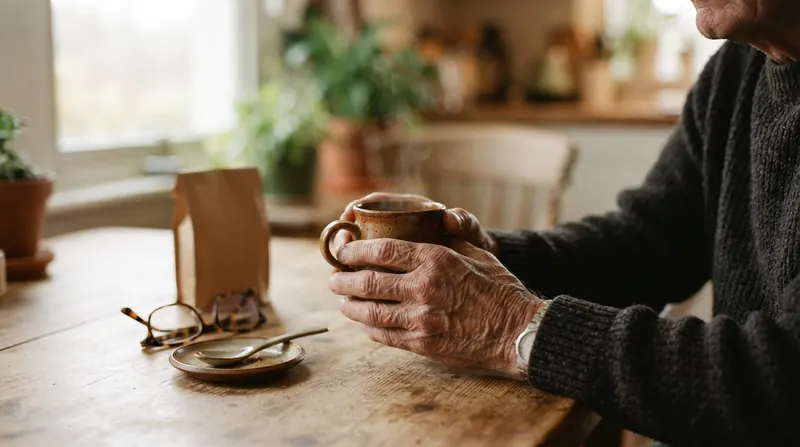
The Two-Ingredient Question, Answered From the Pantry
Because six readers asked some version of it, and because it is the best question in the mailbag: why does two ingredients matter so much, if one of them is unprinted?
I answered it first with the cafeteria. In twenty-two years of school kitchens I learned that the length of an ingredient list correlates with the distance between you and the food — the shorter the list, the closer the kitchen. A bag that prints two ingredients is a bag you could theoretically make yourself, and that is a form of respect the paragraph-long lists cannot fake.
But the honest second half, and the column requires it: two ingredients where one is unnumbered is still a form of mystery, just a tidier one.
The bag says coffee and L-theanine, and the theanine's milligrams per cup are not printed. A skeptic at my table — Carl, visiting again, being Carl — put it plainly: "Two ingredients is honest, Doris. One and a half ingredients is honest with a veil." I printed Carl's sentence in my notebook, because it is the correct sentence, and because the man has been right about exactly one thing per visit since 1974 and I like to document the occurrences.
The reading glasses' verdict: the short list earns trust; the unprinted dose spends some of it back. Both entries go in the ledger.
What I Would Tell My Own Sister
A last word before the letters, and then I will clear the table for the next columnist.
My sister reads this paper from the next state, and she called Wednesday with the tone she has used on me since 1958, which is the tone of a woman about to make a decision and wanting either a witness or a scapegoat.
She wanted to know if she should order the bag, and I gave her the same reading glasses I have given you. The coffee is good and the list is short. The theanine idea has small desk-worker science behind it and no testing on any of us. The dose is unprinted and the guarantee is printed. Her doctor gets the last word on the caffeine, and no bag of anything gets a vote on her sleep.
She ordered the pods, because her machine is a one-button and her patience is a one-button too. Family.
Whatever you decide, decide it at your own table, with your own reading glasses, and your own doctor's number where you can find it without the other pair. That has been the whole project of this column for eleven years, and one bag of two-ingredient coffee is not going to change the format now.
The Columnist's Confession, and the Reading Glasses
I will open the last stretch the way I close everything, with the disclosure that belongs at this particular table.
When my editor handed me this assignment — review the focus coffee, she said, your granddaughter keeps writing to the paper — I expected four paragraphs and a joke about the word "focus." Four paragraphs turned into this, because the questions kept unspooling, and because at sixty-eight you learn that the unspooling is the job.
I have no stake in the Kimera company. The paper takes its advertising like every paper does, and the link in this column pays the paper a commission if you use it, and that is the entire extent of the arrangement, printed here so you can weigh it with everything else on the reading glasses.
What I actually have at stake is a morning column that people at my church have trusted for eleven years to tell them the plain facts about their kitchens, their grandchildren and their knees.
If the bag had failed the Tuesday test, you would be reading a different column today, and it would have been shorter and meaner. It did not fail. It also did not perform any wonders, because nothing at the grocery end of the coffee aisle ever does, and a columnist who tells you otherwise is selling something, and I have already shown you my receipts.
The bag is coffee with an idea in it, and the idea is modest, and modest is the only kind of idea a kitchen table can verify.
The Questions the Mailbag Kept Asking
Twelve letters make a pattern, and the pattern has questions in it. The paper's counsel says answer them in print, so here are the six that arrived more than once, answered once each.
Will it wire me? It carries the caffeine of coffee — 60 to 100 milligrams a pour-over cup — and the bag prints the table. The theanine is reported to soften the edge in small trials, and "reported to soften" is the exact size of that claim.
What if I miss a morning? You miss a morning. Coffee is not a bank account; it is a milk delivery from 1962, and tomorrow's truck comes regardless of today's.
Three more and the mailbag is empty.
Can I take it with my medicines? That is a question for your pharmacist, and I mean that as the highest compliment — pharmacists are the reference librarians of the body, and reference librarians are the finest people this country produces.
Is the dark roast different? The focus blend is a light roast by design — the company says the theanine reads cleaner on a light cup. If you are a dark-roast loyalist like Betty, the honest answer is this is not your bag, and the company makes others.
And the one I saved for last, from a reader who signed only "Still Red-Can in Duluth": Would you spend your own $24.95? I already have, twice, and the second bag is in the cupboard with the good mugs. That is the only endorsement a columnist can make, and I have made it with my own social security.
A Note on the People in This Column
One last housekeeping item, because the paper's counsel insists and the counsel is usually right.
Grandma's Coffee Daily is an advertising feature, not a newspaper, and Doris Ann Whitfield is a pen name — the column has said so since the first edition. Kayla is a composite of the granddaughters who send this column's readers things through the mail, and the Tuesday circle is a composite of the church tables this county is full of, which is what composites are for.
What is not composite: the bag's ingredient statement, the caffeine table, the review count and its average, the seller's contact details, and every quotation marked as a buyer's own words. Those are checked or they do not print. Story on one side of the line, arithmetic on the other — it is the only editorial policy this column has, and it has never needed a second.
Three Letters From Readers
I asked the paper to print the letters that came in after my first column about the bag. Three are worth your time, and I print them exactly as they arrived.
The first is from a man in Ohio, 71, who writes: "I bought the bag for my wife and ended up drinking it myself. It is good coffee. I cannot swear to the focus part, but the coffee part is not in dispute."
The second is from a woman, 66, who is cross with me: "You spent four paragraphs on your coffee circle and one on the price. Some of us are on fixed incomes, Doris." She is right, and I have put the price in twice now.
The third is my favorite, from a grandmother of six in Georgia: "My granddaughter sent me the same bag. I have decided the grandchildren are running a test on us. I am drinking the coffee and passing."
The Last Reading Glasses
My editor says I have written enough for three columns and she is printing all of it, because she says Tuesdays in October are long and the readers like a fight.
So here is the final accounting, posted once, in order, the way I posted the lunch count.
The bag is real, the company is real and answers its own phone. Two ingredients, printed on the front — the honest short list — with the theanine dose unprinted, which is the honest caveat. The caffeine is coffee's own, table printed on the bag. The studies are small, desk-shaped, and none tested this bag. The price is real money and the guarantee is printed by a man who signs his name.
Kayla's sticky-note habit has migrated up the family tree: the bag in my cupboard now wears her handwriting — "grandma's focus fuel" — and I have decided not to wash it off, because at this table we keep our provenance.
The pot has a shape, the morning has a shape, and the column, like the calendar, has held.
The doctor outranks the bag, the bag outranks the columnist, and the grandmother outranks us both — that is the standing order of this kitchen, and it has not changed in sixty-eight years.
The Envelope for the Coffee Aisle, One More Time
Because accountants read this paper too — I raised one — the final figures, rounded once and posted in order.
The bag runs $24.95 for 12 ounces, and my scale says a 12-ounce bag of ground coffee makes about 30 eight-ounce cups, which puts the focus coffee at eighty-three cents a cup. The red can runs twelve cents a cup at the warehouse price. The diner in town charges $3.50 and a tip for the seat.
Kayla's subscription knocks the bag down a bit and the pods run higher per cup, which is the price of pushing one button, and every family contains someone who will pay it.
Posted, then: eighty-three cents a cup against the twelve-cent can and the three-fifty diner.
What the eighty-three cents buys over the can: the two-ingredient label, the theanine idea, a light roast the table pronounces smooth, and a company that answers its own phone on the fourth ring, which in this column's experience is a small miracle of its own kind. What it does not buy: a dose anyone can quote, a study on anyone over forty, or a morning your doctor has not already had an opinion about.
The arithmetic is posted, the glasses are folded, and the table is yours.
The Letters That Arrived Late
The mailbag has a tail, as mailbags do, and the tail deserves its inch of column before the presses roll.
A woman, 69, wrote to say she brews the focus coffee for her husband and the red can for herself, every morning, two kettles, fifty-one years of marriage — "we have never agreed on coffee, Doris, and I see no reason to start with a label." I print this without comment, because no comment would improve it.
And a man, 74, wrote in capitals to ask WHY THE DOSE IS NOT PRINTED, and I will answer him here in the size type he used: THE BAG DOES NOT SAY. That is not the columnist withholding; that is the label, and the label is the whole document the reading glasses have.
Both letters are welcome at this table. The column that cannot survive its own mailbag was never a column, and the grandmother who cannot survive her own Tuesday circle was never running the table to begin with.
One Cup, Two Kettles, Fifty-One Years
I have saved the smallest story for last, because the smallest stories are the ones the table keeps.
My neighbor across the hedge, 88, has outlived two husbands and both of their coffee opinions, and she brews whatever the visiting grandchild brings, every visit, in the good cups. Her verdict on the focus coffee, delivered over the hedge on a Thursday: "It's a nice cup, Doris. I don't know about focus. At my age the focus is on getting the kettle before the dog needs the yard."
That is the truest sentence any reader has sent this column all month, and it is the sentence I would put on the bag if the bag were mine to write. A nice cup, honestly labeled, fairly priced against the diner and honestly dear against the red can. The rest is between you, your kettle, and your doctor.
P.S. If you made it this far, you are the reader this column was built for, and the coffee is on me at the next potluck — the focus kind if you want to run your own Tuesday, and the red-can kind if you are Betty, and both kettles if you are the neighbors across the hedge.
P.P.S. The doctor's appointment beats the bag, every time, no exceptions at this table and none at yours — which is the entire point of having a table.
A Word From My Table to Yours
I have been writing this column for eleven years, and in that time I have told you about my hip, my hydrangeas, my husband's hearing aids and one memorable December about my mother's fruitcake. I do not intend to ruin the record by selling you a bill of goods.
So here is the honest sum of it. The coffee is good. The ingredient list is honest and short, which is more than I can say for most things in a modern grocery aisle. The calm part is real at my table but not proven at anybody's laboratory, the price is what it is, and the guarantee is printed in plain words by a company that answers its own email.
If your morning cup is already your friend, keep your money and my blessing. If your hands hum by eleven o'clock like my daughter's do, then this bag is a reasonable thing to try once — with the guarantee in your pocket and your doctor's advice ahead of everything I have written here.
That is the whole review. The kettle is on, the table is set, and you are welcome at it any Tuesday.